Beasts of Burden
Uh-oh. I just had a negative thought about the fire department. Let me sit down and try to figure this out. Is it about somebody at the fire department? No. Is it about something at the fire department? Well, no (the radio thing seems to be moving in the right direction). Is it about the department as an entity? Sort of, but not specifically the department. I think it might be about the kind of department it is; a volunteer department.
But that’s not quite it either. The volunteer angle is one of its best attributes. People are there for public service, not for money. That really has a way of clearing the decks of entire categories of drama. Career progression grudges. People counting the days until their pension maxes out. Optimizing work to pay ratios. Labor strife, generally.
Fights between city councils and city managers and firefighter unions tend toward the rule rather than the exception. That is largely because nothing costs a City more on a per-employee basis than a fire department. Fire departments are extravagantly expensive. The buildings. The vehicles. The equipment. The food. The training. The people. Every moving part dwarfs the gross domestic product of a mid-level European principality. City councils, meanwhile, get elected by doing things for people while taxing them as little as possible. The inherent conflict in that equation typically falls to city managers to figure out. Which makes for an interesting and enjoyable career, believe you me.
I never bought into the whole city manager / firefighter union cage match thing at any point in my career. The worst flare up was a few IAFF yard signs around election time about asking the Davenport City Council why every fire company was not fully staffed today. The answer was simple; because an abnormal number of firefighters may have called in sick that day, and the City did not want to explode its overtime expenses into something that would have wiped out the Parks Department budget in its entirety.
IAFF #17 President Emeritus Jason Roth (great guy) once explained the expense thing to me this way, “Craig, we are thoroughbreds. Public Works are draft horses. Police are German Shepherds. We are your thoroughbreds. Thoroughbreds are expensive.”
Hard to argue with. Agility, speed and spirit. Worth every penny.
Career fire departments have some undeniable advantages. #1. Better food. Like, off the charts better food. #2. More training. You are there all day, or two days in a row if that’s your schedule. Between calls (at least in theory) you can train. #3. Actual time off. You show up on the days you work. You don’t show up on the days you don’t work. Some other shift shows up, which is genius level work pacing. You go, IAFF.
Then, there’s the pension. If you somehow make it to retirement with your shoulders, knees, hips and back still functioning and no cancer, a firefighter pension is a thing of such majesty, one wonders how Michelangelo left it off the Sistine Chapel ceiling. Not being killed or broken into pieces is the key to the benefit program, though. Lastly, I suppose, nurses. Paid career firefighters, both men and women, have more regular access to the only kryptonite firefighters are widely known to succumb to; nurses. Pastry chefs, a close second.
Turns out though, for all the advantages of career fire departments, that thoroughbred expense problem is so financially ruinous that seventy-something percent of firefighters across the nation are volunteers. With big cities barely being able to afford fire departments these days; small towns and villages don’t stand a chance of staffing a paid, career department.
So here’s the rub which spawned the negative thought. Hazardous materials class tonight. Personnel Committee meeting tomorrow night. Thursday ropes training the night after that. All day Saturday at Madison Area Technical College’s classrooms and fire training center for class and test practice. All day Sunday back at MATC for testing. Raise ladders, go in and out of windows, put out fires, rescue dummies. Be gentle with them as you find them in the dark, carry them down the ladder and place them into the rescue baskets. The dummy will, as always, decline to offer thanks. Shout “checking for overhead obstructions!” at all the right moments, but not one second before or after the right moment. Having three points of contact on everything all the time; a directive that has never survived five seconds on a real fireground. Leave smelling like campfire with a constellation of bruises arranged as Orion’s Belt tightened around Ursa Minor.
It’ll be five degrees on Saturday and Sunday and those 150 lb. dummies aren’t going to walk themselves back up the icy stairs for the next evolution.
I am just saying it can be a little much. When your leisure time starts to feature more hours with your department compatriots than your life partner. No offense to Pete or James, both swell classmates. But no match for domestic bliss. Even Secretariat himself went full tilt for only sixteen months, before finding something more lucrative and fun to do.
Such is the crux of being a volunteer firefighter these days. You need to take the same classes and have the same credentials as career firefighters, but you need to make time for that somewhere between your actual job, your actual family and what is left over in your actual life. I have no idea how the men and women who volunteer with school age children do it.
We are, I reckon, a curious tribe; over-trained, under-slept, and motivated by a quaint notion of civic duty that looks a touch like foolishness to the rest of the world. Whether on the way to class or a call, we drive past taverns where comfortable folks are sipping beers and warm houses where children are being read bedtime stories. We lumber into the cold to practice a grim ballet with a weighted dummy because the dummy might be a neighbor someday.
We go home, smelling like campfire and sweat. Late at night, on our way to the spare sweatpants and t-shirt we have left tucked into the towel drawer to change into after a shower, there they will be -- a couple cookies on the kitchen counter. Someone who loves us has gone to sleep, but knows we’ll be hungry when we get home.
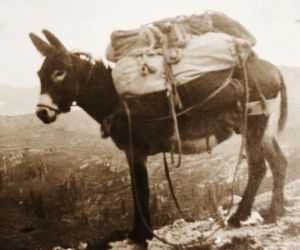
It all makes a kind of rough, quiet sense. Maybe, or maybe not, thoroughbreds. But hardy beasts, nonetheless.