Loopy
Something’s been bugging me, so I did some spelunking. Not the traditional caving, because confined spaces and bats creep me out and I can never remember which ones are stalactites and which ones are stalagmites.
If spelunking is, “exploring wild, non-commercial caves, often involving crawling, climbing, and navigating tight, dark environments for discovery”, the good news is you can do that without smelling like guano for a week. Or, at least, I can. Because I have a wild non-commercial cave sitting conveniently atop my spinal cord.
Nobody -- that I know of -- has said I should have waited for an order to enter the house with James last week when the fire training went a little sideways. But what is bugging me is I don't have a clear memory of deciding anything. It was stimulus -> response -> golly it’s dark and hot -> keep that hose going James. Simple as that.
Scary as that.
It is not like I have had some deficit of decision training over the years. Cauliflower is yuck. Stoves are hot. A metalflake purple dune buggy may not be the most practical first car in the upper Midwest. The crazy / hot matrix. Newspapers get a little cranky when they’re losing 100 subscribers a day. I’ve lived. I’ve learned. I’ve got certificates suitable for framing.
Got a couple of them from some tweedy pants school in Cambridge, Mass. One of them from a class where colonels and admirals and some of the smartest people on the planet (from the pre-RFK CDC) were being taught how things go wrong. Botched operations. Terrorist bombings. Space shuttle disasters. New Orleans after Katrina. Pandemics. Civil unrest. It was a class of nightmares, with the lessons learned being one of the reasons Davenport never flooded again, back in the day.
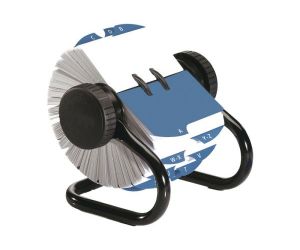
There’s this thing called Recognition Primed Decision making (RPD). It is a decision-making model that combines experience-based pattern matching to quickly select a workable course of action in high-stakes, time-pressured situations. You basically spin a Rolodex (ask your grandparents) of prior experience in your head to find something that matches what you are experiencing now and use the Rolodex card that most closely matches what is in front of you to select what to do next. It is highly efficient. It is routinely successful. It is what an emergency room doctor will use to save your life.
But what I learned in the class is RPD is imperfect. It is imperfect for two reasons. The first is the Rolodex cards near the front get spun through first. Recency effect, is the name of the first problem. The second problem is more existential. THERE IS NO CARD THAT PERFECTLY MATCHES. Oh, there are cards that are close. There are cards that will get you through. But there is no card that perfectly matches what you are experiencing right now.
Right now has not happened yet.
Remember that Wednesday night in Cleveland some years back? The one where Kyle Hendricks was schooling the Cleveland Indians on control and location, before he got yanked in the sixth inning for a series of three power pitchers that almost lost the game? The one where God herself was tired of the Cubs losing and spun up a seventeen minute rain delay so the Northside boys could collectively calm down and think? That had never happened before, and will not happen again.
It was the game where the smartest manager in baseball made three RPD power pitcher mistakes in a row, until switching decision-making models; from RPD to OODA Loop.
Observe, Orient, Decide, Act. The OODA Loop is a decision making model designed to outpace an adversary by cycling through moves faster than the adversary. Developed by Air Force Colonel John Boyd, it is a mental model for rapid, effective decision-making in chaotic, high-stakes environments.
The goal is not just to be fast through the loop, but to create a higher tempo of operations that disrupts the opponent's rhythm. By cycling faster, you force the opponent to react to your previous action rather than the current reality, causing them to make poor decisions. Importantly, the loop never stops; the results of the "Act" stage feed back into the next "Observe" stage.
Lester, Chapman and Edwards were RPD selections. Following soft-throwing Hendricks, late in the game, throw heat. Baseball 101. It did not work, as evidenced by cardiac events across Cubs nation when Rajai Davis went deep off of Chapman. Observe, orient, decide and act to put ground ball specialist Mike Montgomery on the mound. Throw two pitches. Bryant to Rizzo. End the curse.
You can make mistakes with the OODA Loop, and still win. Keep that in mind, because this next part -- where mistakes can be born -- is kinda important.
Neuroscience says the prefrontal cortex is the most recently evolved part of the human brain. It is responsible for self-monitoring, deliberation, risk assessment, future planning, and the voice in your head that asks, are you sure about this? Neuroscience also says fifteen year old boys are some years away from fully developed prefrontal cortexes (see: Metalflake purple dune buggy).
The prefrontal cortex is, in many respects, the voice of civilization. When it is running at full capacity, you think about consequences. You weigh options. You experience doubt. You wonder what people might think.
In high-stakes, high-demand situations that consume your full attention, a measurable thing happens to that part of the brain. Activity drops. The self-monitoring quiets. The inner critic -- that voice of doubt that chimes in during ordinary life -- goes offline.
Researcher Arne Dietrich, who first described this phenomenon while trying to understand why his long training runs felt like altered states of consciousness, named it transient hypofrontality. Transient: temporary. Hypo: reduced. Frontality: prefrontal cortex. Your brain redistributes its resources. The part that second-guesses steps back. The parts that act, perceive, and solve step forward.
This is not a malfunction. It is, if anything, an upgrade -- for a specific class of problems. Time distorts. Pain recedes. Decision-making that would normally involve internal debate becomes immediate and clear. Transient hypofrontality. Every purple car (and every Lotus) ever produced requires it to find a buyer.
So. Why did I not wait for an order?
Framing it that way assumes there was a moment -- a pause, a gap, a breath -- in which waiting was an option. There wasn't. The Rolodex was spinning and finding nothing close. The Loop was running, because it never stops. James and I were already going. The prefrontal cortex, that careful voice of consequence, had already stepped aside for something older and faster and, in that particular moment, more useful.
You cannot wait for an order in a gap that does not exist.